By Aaron Howard | Jewish Herald Voice May 21, 2026
When the Second Temple was destroyed in 70 C.E., the rabbis issued a decree prohibiting the making of music using instruments as a sign of mourning.
Yet we know that klezmer guilds existed in Poland in the 17th century. These musician unions handled everything from bookings at weddings to training musical apprentices. By the end of the 19th century, there were an estimated 3,000 professional klezmorim in Russia.
Marcia Sterling calls klezmer “Jewish soul music.” Sterling co-founded Houston-based The Best Little Klezmer Band in Texas with her husband Dan Strba. The band has been bringing the soundtrack of Jewish roots music to weddings, life-cycle celebrations and in-concert venues for the past 33 years.
The Best Little Klezmer Band will present a concert, “Songs of Remembrance and Celebration,” on June 4 at 6:30 p.m., at the Albert and Ethel Herzstein Gallery For Judaica (Level 1 in the Law Building) in the Museum of Fine Arts, Houston. The concert is free to the public.
The repertoire will include folk, religious, Hasidic and classical music along with Broadway tunes.
“What we play is quintessentially Yiddish, even though it was originally instrumental music. The songs are filled with Yiddish wisdom,” Sterling told the JHV.
“I grew up in the tradition. My family were Yiddish speakers. The klezmer band I played with in Chicago was integral to my life.
“The beginning of klezmer goes back 400 to 500 years ago. It was the soundtrack for weddings and community festivals. It was for celebrating happy occasions. Klezmer was the music for everyday life for the Jews of Eastern Europe.
“Today, there are klezmer festivals all over the world. Many communities find joy in this roots music,” said Sterling.
Prior to the mid-19th century, very little klezmer music was notated. Most young klezmorim learned tunes by heart as apprentices.
“You learned from your family,” said Sterling.
With the emigration from Eastern Europe to the U.S. beginning in the 1880s, klezmer music came under the influence of American popular styles and the Yiddish theater. Radio pushed Jewish music to the fringes of the market. In the post-World War II period, the major record labels abandoned Yiddish music. And youngsters dismissed klezmer as old-fashioned and square.
Then in the late 1970s, something unexpected happened. Dubbed “the klezmer revival,” a number of young American Jewish musicians rediscovered traditional Eastern European Yiddish instrumental music. Klezmer Revival bands brought high energy, fun, serious scholarship and innovation to Yiddish instrumental music.
When Sterling co-founded The Best Little Klezmer Band in 1993, she hoped the band would be able to bring to the Houston community the joy of celebrating with tradition.
“We sought to be an integral part of the Jewish community because that’s ultimately the community we serve,” she said.
“In Texas, my hope was that people would love klezmer as much as we did. There’s great interest in this music and the fact it has survived for hundreds of years and is still vibrant.
“I got more than I had hoped for. From the very beginning, The Best Little Klezmers were enthusiastically embraced by Houston’s vibrant Jewish community. We felt welcomed, which inspired us to bloom. And for that, we will be eternally grateful.
Our music captures the fragility and beauty of life. It has the quality of laughing through one’s tears.” https://jhvonline.com/best-little-klezmer-band-presents-concert-at-mfah-p36346-152.htm
What is Klezmer?
If you enjoy music that tells a story and spans the emotional spectrum from deep soulfulness to ecstatic joy, you’ll find Klezmer to be a fascinating discovery. Sometimes described as the Jewish Blues, this spirited musical form has become a kind of nostalgia, a poignant longing for the beauty, grace, and joy of what was and then what suddenly was no more. Through a deep love for Yiddish culture, modern day Klezmers have rebirthed what was, breathing new life into and reimaging the world of their ancestors; the beauty of family, the grace of community, the joy of celebration, and the renewal of hope.
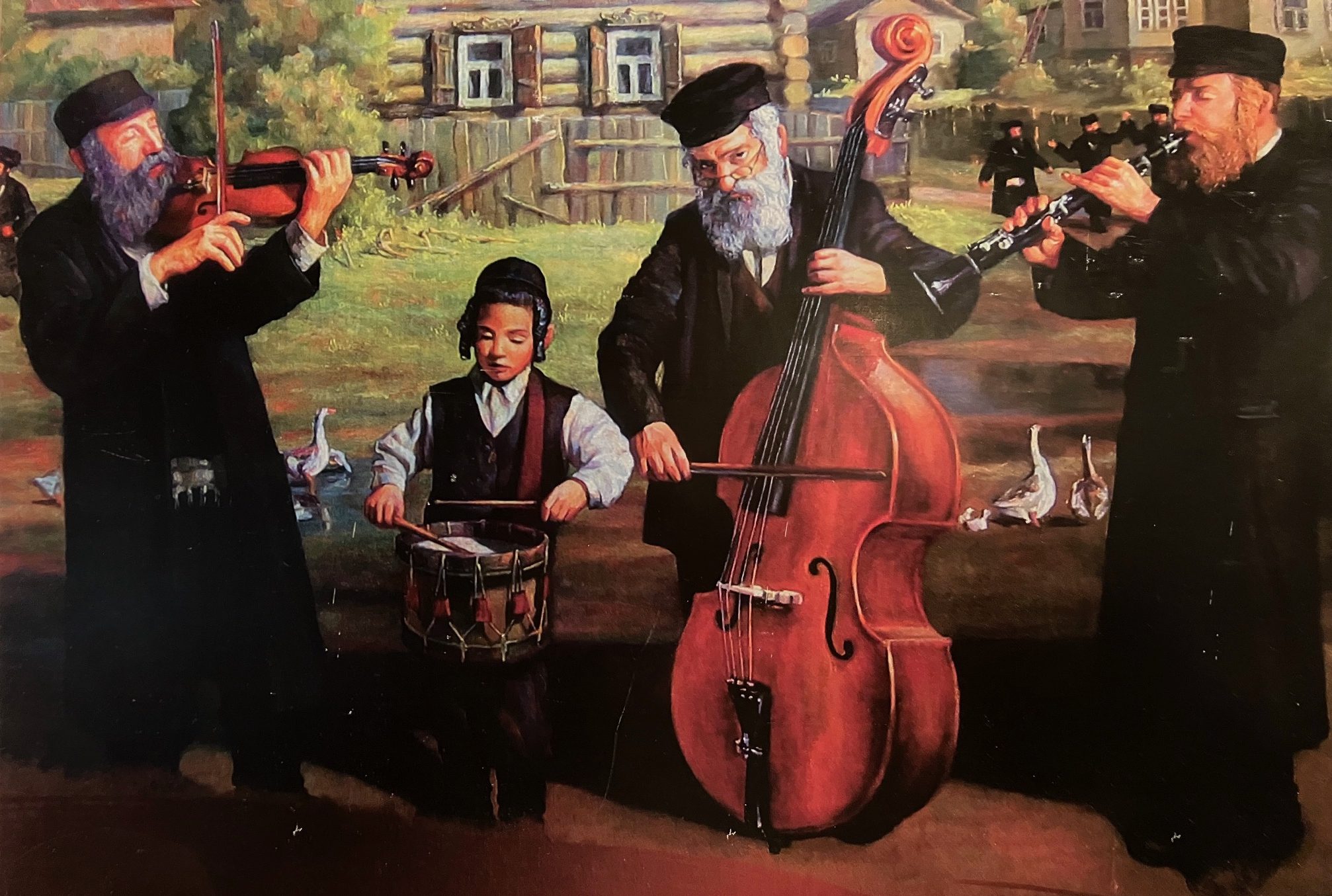
The word Klezmer is the Yiddish pronunciation of two Hebrew words: kley (instrument) and zemer (song). While it originally meant the instruments themselves, it eventually came to describe the musicians and the entire genre of music. Historically, this was the "celebration music" of Jewish communities in Eastern Europe, the essential soundtrack for weddings, the dedication of new buildings, and community gatherings and festivals.
The Sound: "Laughing Through One’s Tears" One of the most unique qualities of Klezmer is its emotional range. It is famous for a "laughing-crying" sound, krekhts or krekhtsn (Yiddish for "sobs") are a kind of dreydlekh (ornamentation) often produced by the violin or clarinet.
- Emotional Depth: The music can shift from a haunting, prayer-like melody to a wild, boisterous dance in an instant.
- Improvisation: Much like jazz, Klezmer musicians are masters of improvisation, adding their own flourishes and "vocal" effects to the melodies.
- Diverse Rhythms: As itinerant musicians who frequently played for non-Jewish audiences, Klezmers blended Jewish traditions with the energetic folk songs and dances of Russia, Romania, Ukraine and other neighboring Slavic communities.
Why It Still Resonates: Today, Klezmer is more than just a historical artifact. It is a "multi-dimensional experience" that combines Yiddish theater songs, folk tunes, and jazzy American Pop. At its heart, Klezmer captures the fragility and beauty of life, celebrating joy even in the most difficult times. Whether you are familiar with the culture or a complete newcomer, the energy of this music is universal

About Klezmer Music
Klezmer is the Yiddish pronunciation of the Hebrew KLEY-Z'MER (lit.; vessel-of-song)-"musical instrument"-which, in the Eastern European context, came to refer to the musicians themselves. Strictly defined, Klezmer music is the traditional instrumental music of the Eastern European Jews, performed at weddings and other celebrations such as the dedication of a Torah scroll or a synagogue.
Comprising dance tunes, as well as music for listening at the wedding ritual and banquet, it is one part of a rich totality of East Ashkenazic music that includes diverse liturgical and folk song traditions, as well as, in more recent times, Yiddish theater, popular music, and art music. Klezmer was brought to the United States, where it encountered jazz and ragtime and thrived in the early days of New York's Jewish community.
- By the end of World War II, many of the Klezmer families turned to mainstream music, and the form virtually disappeared as a living tradition.
- The 1970s saw a revitalization of interest in Klezmer as young musicians listened to early recordings and connected with the few surviving old masters.
Chassidic Roots and Musical Influence
Much of this high-spirited music is rooted in the Chassidic culture of Eastern Europe. A mystical-pietistic movement that swept through the Eastern European Jewish world during the mid-1700s, Chassidism laid much stress on music as a component of divine service. Thus, it is not surprising that many of its leaders and adherents were gifted composers and singers.
Whether one is intimate with Jewish culture or a newcomer, Klezmer music opens the door to a world rich with energy and emotion that can be understood by all.
The klezmorim of Eastern Europe (Jewish musicians skilled in the art of improvisation) drew upon both the lyrical, haunting melodies of the synagogue and the boisterous dances of the Russians, Rumanians, and other surrounding cultures to create a unique and evocative style of their own.
With the destruction of the last synagogues of Eastern Europe and the disappearance of the shtetl (Jewish ghetto), the soulful sound of Klezmer was seemingly lost and forgotten.
Then, in the late 1970s, young Jewish musicians were drawn to the music of their Eastern European heritage preserved on antique recordings rescued from Grandma's attic.
- The earthy character of this traditional Jewish dance music includes Russian kozatskis, Ukrainian kolomeikes, and Rumanian horas, to name but a few dances.
- The laughing-crying quality of the violin and clarinet, alternating between exuberance and remorse, evokes a sense of laughing through one's tears.
The revival of Klezmer music has also come to include the revival of Yiddish folk songs, both those of a high literary lineage, and the colorful, often comic songs of the Yiddish theater, a vaudeville tradition which continued to thrive in America through the 1950s in the so-called "Borscht Belt" of the Catskills.
The combination of these various styles--instrumental dance music, folk songs, theater songs, and jazzy Yiddish pop music from the 1930s-50s, creates a rich, multi-dimensional experience of the lost world of Eastern European Jewish culture and vignettes of America at the turn of the century as seen through immigrant eyes.